 TR
TR  EN
EN  RU
RU .png)
Hallux Valgus Surgical Treatment
Hallux Valgus Surgical Treatment
What is Hallux Valgus?
Hallux valgus is a condition in which the big toe is angled towards the other toes, creating a protrusion on the foot. This condition can cause foot pain, swelling, and foot deformity. Surgical treatment of hallux valgus may vary depending on the severity of symptoms, the patient's age, health status, and other factors. Here are the hallux valgus surgical treatment options:
Bunionectomy:
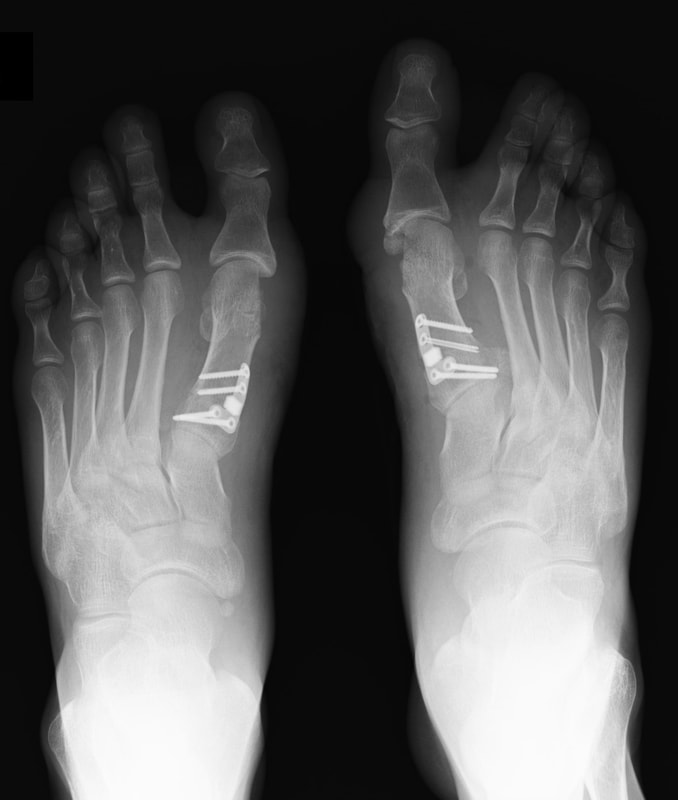
The most common surgical treatment method for hallux valgus is bunionectomy. During this procedure, the bulge (bunion) at the base of the big toe is removed and the bone is cut and realigned to bring the toe into correct alignment. The bones and joints are then put back into place. This procedure may be effective in cases where symptoms are mild or moderate.
Osteotomy:
Osteotomy is a surgical procedure that involves reshaping the metatarsal bone, which forms the basis of the big toe. This method helps correct the bone deformity and brings the finger into correct alignment. Osteotomy may be used in more severe cases of hallux valgus.
Arthrodesis (Joint Weld):
In severe cases of hallux valgus or if the patient has serious damage to the joint, arthrodesis may be performed to stabilize the joint between the big toe and the metatarsal bone. In this process, the joint is locked and the movement of the finger is limited.
Prosthesis Surgery:
In advanced stages of hallux valgus and due to joint destruction, prosthetic surgery to the big toe joint may be required. The prosthesis completely replaces the joint and limits joint movement while relieving pain.
Following surgical treatment, patients are often required to adhere to rehabilitation and physical therapy programs. This can help regain foot function and mobility. The recovery process after surgery is personalized and depends on your doctor's recommendations and guidance.
Hallux valgus surgery can help patients relieve their symptoms, improve the appearance of their feet, and help them return to normal activities. However, before surgery, you should have a detailed discussion with your doctor about the risks and benefits.
Contact Us
.png)